

Buy 2-MMC Crystal Powder: Chemical Properties, Research and Scientific Overview
Introduction to 2-MMC
2-MMC, also known as 2-methylmethcathinone or 2-methyl MC, is a synthetic cathinone that has become a subject of analytical, forensic, pharmacological, toxicological, and regulatory research.
The compound belongs to the broader family of synthetic cathinones, which are chemically related to cathinone and feature a characteristic β-keto structure.
2-MMC is particularly relevant to comparative research because it is structurally related to other methylmethcathinones, including 3-MMC and 4-MMC. Although these compounds share the same molecular formula, the position of the methyl group on the aromatic ring differs.
This structural distinction is important because positional isomers can display different analytical and biological characteristics.
The European Union Drugs Agency (EUDA) identifies 2-MMC as a synthetic cathinone and has monitored the substance through the European Union Early Warning System for new psychoactive substances.
What Is 2-MMC Crystal Powder?
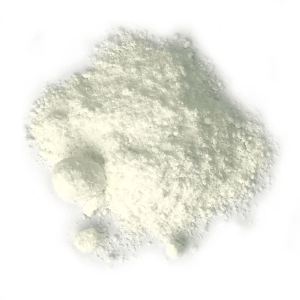
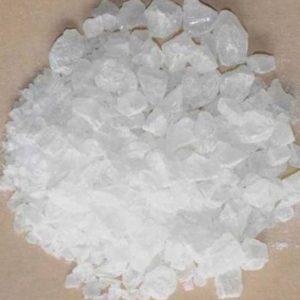
2-MMC Crystal Powder describes a physical form of 2-methylmethcathinone.
The term “crystal powder” refers to the physical appearance or presentation of a material. It does not, by itself, establish chemical identity, purity, concentration, or composition.
This distinction is important in laboratory environments.
A material identified as 2-MMC should be confirmed using appropriate analytical methods rather than relying exclusively on its appearance, labeling, or physical characteristics.
For legitimate analytical research, researchers may document:
- Compound name
- Chemical identifiers
- Physical form
- Batch information
- Analytical documentation
- Storage conditions
- Testing methodology
- Regulatory classification
2-MMC Chemical Identity
The systematic chemical name of 2-MMC is:
2-(methylamino)-1-(2-methylphenyl)propan-1-one
Its common chemical name is 2-methylmethcathinone.
The compound belongs to the synthetic cathinone class and is structurally related to methcathinone.
2-MMC Chemical Specifications
| Property | Information |
|---|---|
| Compound | 2-MMC |
| Common name | 2-Methylmethcathinone |
| Alternative name | 2-Methyl MC |
| Chemical class | Synthetic cathinone |
| IUPAC name | 2-(Methylamino)-1-(2-methylphenyl)propan-1-one |
| Molecular formula | C11H15NO |
| Molecular weight | 177.24 g/mol |
| Physical form | Crystal powder |
| Research area | Analytical, forensic and pharmacological research |
EUDA and PubChem both identify the molecular formula as C11H15NO and molecular mass as approximately 177.24 g/mol.
2-MMC Molecular Formula
The molecular formula for 2-MMC is:
C11H15NO
Its molecular weight is:
177.24 g/mol
These identifiers are useful when comparing 2-MMC with structurally related compounds.
However, molecular formula alone cannot uniquely identify a chemical.
For example, 2-MMC, 3-MMC, and 4-MMC have the same molecular formula and molecular mass, despite having different molecular structures.
This is why analytical confirmation is important when distinguishing related synthetic cathinones.
2-MMC Chemical Structure
2-MMC contains the characteristic structural components associated with synthetic cathinones.
Its molecular structure includes:
- A phenyl aromatic ring
- A methyl substituent on the aromatic ring
- A ketone functional group
- A methylamino group
- A three-carbon side-chain framework
The position of the methyl substituent is particularly important.
In 2-MMC, the methyl group occurs at the 2-position of the aromatic ring.
This differentiates it from:
- 3-MMC, where the methyl group is at position 3
- 4-MMC, where the methyl group is at position 4
These compounds are therefore positional isomers.
2-MMC vs 3-MMC vs 4-MMC
Understanding the differences between these compounds is useful for analytical chemistry and forensic research.
| Compound | Aromatic methyl position | Molecular formula | Molecular mass |
|---|---|---|---|
| 2-MMC | 2-position | C11H15NO | 177.24 g/mol |
| 3-MMC | 3-position | C11H15NO | 177.24 g/mol |
| 4-MMC | 4-position | C11H15NO | 177.24 g/mol |
The identical molecular formula demonstrates why mass alone may not always be enough to distinguish positional isomers.
Laboratories may therefore combine mass spectrometry with chromatographic or spectroscopic techniques when compound identification requires a high degree of confidence.
2-MMC and Synthetic Cathinones
Synthetic cathinones represent a large family of chemically related substances.
Their structures are derived from the basic cathinone framework, which contains a β-keto group associated with a phenethylamine-like structure.
Chemical modifications can occur at different positions within the molecule.
These modifications can alter:
- Molecular structure
- Physical properties
- Analytical behavior
- Metabolism
- Pharmacological characteristics
- Toxicological profile
2-MMC is therefore best considered as one specific compound within the larger synthetic cathinone family.
For SEO purposes, this page should focus specifically on 2-MMC Crystal Powder, while your broader synthetic cathinone category should remain focused on the category term itself.
2-MMC Analytical Research
Analytical chemistry is an important area of research involving emerging synthetic cathinones.
Researchers may need to identify 2-MMC in chemical samples, reference materials, or biological matrices.
Potential analytical approaches include:
Gas Chromatography-Mass Spectrometry
GC-MS can combine chromatographic separation with mass-spectral analysis.
This can help laboratories investigate the identity and chemical characteristics of a sample.
Liquid Chromatography-Mass Spectrometry
LC-MS is another widely used analytical approach for investigating compounds that may be unsuitable for particular GC workflows.
High-Resolution Mass Spectrometry
High-resolution instruments can provide highly accurate mass measurements that assist in chemical characterization.
Nuclear Magnetic Resonance
NMR spectroscopy can provide structural information by examining the chemical environment of atoms within a molecule.
The appropriate technique depends on the research question, sample matrix, instrumentation, validation requirements, and laboratory procedures.
2-MMC Crystal Powder and Laboratory Identification
The physical appearance of a crystal powder should not be considered sufficient evidence of chemical identity.
Different chemical compounds can have similar physical appearances.
Therefore, a scientifically robust identification process may combine:
- Sample documentation
- Reference standards
- Chromatographic analysis
- Mass spectrometry
- Spectroscopic techniques
- Appropriate laboratory controls
This is particularly relevant when working with synthetic cathinones because many members of the group share similar names, structures, or molecular formulas.
2-MMC Pharmacological Research
2-MMC is classified as a synthetic cathinone associated with stimulant pharmacology.
However, available evidence concerning individual newer synthetic cathinones can be considerably more limited than the evidence available for older and better-studied substances.
Therefore, research conclusions should be based on compound-specific evidence.
Structural similarity to another cathinone does not automatically demonstrate identical:
- Pharmacological activity
- Potency
- Metabolism
- Pharmacokinetics
- Toxicity
- Biological target interactions
For scientific writing, it is preferable to distinguish experimentally established findings from hypotheses based on structural relationships.
2-MMC Toxicology Research
Toxicological research examines how chemical substances interact with biological systems and identifies potential risks associated with exposure.
Research involving 2-MMC can include:
- Analytical detection
- Biological sample analysis
- Metabolite identification
- Forensic investigations
- Toxicological screening
- Adverse-event analysis
- Comparative synthetic cathinone research
Because new psychoactive substances can emerge faster than comprehensive toxicological evidence becomes available, researchers should interpret findings carefully.
The absence of extensive evidence should not be interpreted as evidence that a compound is safe.
2-MMC Metabolism Research
Metabolism is another area relevant to analytical and toxicological research.
When a chemical enters a biological system, metabolic processes can transform the original compound into one or more metabolites.
Identifying these metabolites can help researchers understand:
- Metabolic pathways
- Biological transformation
- Analytical biomarkers
- Detection windows
- Forensic toxicology findings
The metabolism of one synthetic cathinone should not automatically be assumed to match that of another structurally related compound.
2-MMC Research Applications
Research involving 2-MMC may fall into several scientific disciplines.
Analytical Chemistry
Researchers can investigate methods for identifying and characterizing 2-MMC.
Forensic Science
2-MMC can be relevant to the development and validation of analytical methods used to identify emerging substances.
Toxicology
Researchers can study analytical detection, metabolism, and toxicological characteristics.
Pharmacology
Scientific investigations can examine how 2-MMC interacts with biological systems.
New Psychoactive Substance Monitoring
Monitoring programs can track the appearance, prevalence, chemical identity, and regulatory development of emerging synthetic cathinones.
2-MMC Safety and Laboratory Handling
2-MMC should not be presented as an approved medicine, nutritional supplement, or established therapeutic treatment.
Research involving psychoactive synthetic cathinones should be performed only within appropriate laboratory, institutional, and legal frameworks.
Standard laboratory considerations may include:
- Appropriate personal protective equipment
- Controlled laboratory access
- Accurate labeling
- Secure storage
- Chemical hygiene procedures
- Appropriate waste disposal
- Exposure-control measures
- Validated analytical procedures
The precise requirements depend on the jurisdiction, institution, quantity, physical form, and intended research activity.
2-MMC Legal Status
The legal status of 2-MMC differs between jurisdictions and may change over time.
EUDA has identified 2-MMC as a new psychoactive substance and has evaluated it within the European Union’s Early Warning System framework.
In 2026, EUDA also reported that 2-MMC was among three new psychoactive substances brought under EU-wide control measures, alongside N-ethylnorpentedrone and 4-BMC. The EU measures entered into force on 12 January 2026.
Researchers should therefore verify the current legal requirements applicable to their country, institution, and specific research activity before acquiring, possessing, transporting, or analysing 2-MMC.
Frequently Asked Questions About 2-MMC Crystal Powder
What is 2-MMC Crystal Powder?
2-MMC Crystal Powder refers to a powdered physical form of 2-methylmethcathinone, a synthetic cathinone. The physical appearance of a powder does not independently establish its chemical identity or purity.
What is 2-MMC?
2-MMC is the common abbreviation for 2-methylmethcathinone, a synthetic cathinone.
What is the molecular formula of 2-MMC?
The molecular formula is C11H15NO.
What is the molecular weight of 2-MMC?
2-MMC has a molecular mass of approximately 177.24 g/mol.
What is the IUPAC name of 2-MMC?
The IUPAC name is 2-(methylamino)-1-(2-methylphenyl)propan-1-one.
Is 2-MMC a synthetic cathinone?
Yes. 2-MMC is classified as a synthetic cathinone and has been monitored as a new psychoactive substance.
How is 2-MMC different from 3-MMC?
The key structural difference is the position of the methyl group on the aromatic ring. 2-MMC has the methyl group at position 2, while 3-MMC has it at position 3.
How is 2-MMC different from 4-MMC?
2-MMC has an aromatic methyl substituent at the 2-position, while 4-MMC has it at the 4-position.
Can the purity of 2-MMC crystal powder be determined visually?
No. Visual appearance cannot reliably establish chemical identity or purity. Appropriate analytical testing is required.
Is 2-MMC approved for medical use?
2-MMC should not be described as an approved medicine or established therapeutic treatment.
Is 2-MMC legally controlled?
Its legal status depends on the jurisdiction. EUDA reported that 2-MMC was brought under EU-wide control measures in January 2026.
Conclusion
2-MMC Crystal Powder refers to a powdered physical form of 2-methylmethcathinone, a synthetic cathinone that has become relevant to analytical chemistry, forensic science, toxicology, pharmacology, and new psychoactive substance monitoring.
2-MMC has the molecular formula C11H15NO, a molecular mass of approximately 177.24 g/mol, and the systematic name 2-(methylamino)-1-(2-methylphenyl)propan-1-one.
Its structural relationship to 3-MMC and 4-MMC makes accurate identification particularly important because these compounds share the same molecular formula while differing in the position of their aromatic methyl substituent.
For legitimate scientific research, chemical identity should be established through appropriate analytical procedures rather than relying on appearance or labeling alone.
The regulatory environment surrounding 2-MMC has also developed significantly, with EU-wide control measures taking effect in January 2026. Researchers should therefore verify current regulations before conducting work involving the compound.

 English
  French
  Spanish
  Italian
  Portuguese
  Dutch
Dutch
Reviews
There are no reviews yet.