

Buy Ethyl Pentedrone Powder: Chemical Properties, Research and Scientific Overview
What Is Ethyl Pentedrone?
Ethylpentedrone, commonly known as N-ethylnorpentedrone (NEP), is a synthetic cathinone belonging to a broader class of β-keto phenethylamine derivatives. It is also referred to by names including N-ethylpentedrone, N-ethyl pentedrone, α-ethylaminopentiophenone, and 2-(ethylamino)-1-phenylpentan-1-one.
Ethylpentedrone has attracted attention in analytical chemistry, forensic science, toxicology, pharmacology, and new psychoactive substance monitoring.
The European Union Drugs Agency (EUDA) currently monitors NEP through the European Union Early Warning System for new psychoactive substances. In 2025, the agency published an initial report examining the substance and its potential public-health risks.
Because Ethylpentedrone is a psychoactive synthetic cathinone, it should be discussed in scientific terms rather than presented as an established medicine, therapeutic compound, dietary supplement, or general-purpose research aid.
Ethyl Pentedrone Chemical Identity
Ethylpentedrone has the systematic chemical name:
2-(ethylamino)-1-phenylpentan-1-one
The compound contains a phenyl ring, a ketone group, an ethylamino substituent, and a pentanone side-chain framework.
The EUDA initial report identifies several names for the compound, including:
- Ethylpentedrone
- N-Ethylpentedrone
- N-Ethyl pentedrone
- N-Ethylnorpentedrone
- α-Ethylaminopentiophenone
- EAPP
- NEP
- NEPD
The base compound has the CAS number 779974-89-9, while the hydrochloride salt has a separate CAS number, 18268-16-1. The EUDA report also identifies separate CAS numbers for the R and S stereoisomers.
This distinction is important because different chemical forms should not be treated as interchangeable when documenting laboratory samples.
Ethyl Pentedrone Molecular Formula
The molecular formula of Ethylpentedrone is:
C13H19NO
Its molecular structure corresponds to a molecular mass of approximately 221.30 g/mol.
The compound can be represented by the IUPAC name 2-(ethylamino)-1-phenylpentan-1-one. EUDA provides standardized chemical identifiers and structural information for the base compound and its hydrochloride form.
Ethyl Pentedrone Chemical Profile
| Property | Information |
|---|---|
| Common name | Ethylpentedrone |
| Alternative name | N-Ethylnorpentedrone |
| Abbreviation | NEP |
| IUPAC name | 2-(Ethylamino)-1-phenylpentan-1-one |
| Chemical class | Synthetic cathinone |
| Molecular formula | C13H19NO |
| Molecular mass | Approximately 221.30 g/mol |
| Base CAS number | 779974-89-9 |
| Hydrochloride CAS number | 18268-16-1 |
| Chemical framework | β-keto phenethylamine derivative |
Ethyl Pentedrone Chemical Structure
The structure of Ethylpentedrone contains several features that characterize it as a synthetic cathinone.
At one end of the molecule is a phenyl ring. Unlike some substituted cathinones, NEP does not have an additional halogen or methyl substituent on the aromatic ring.
The molecule also contains a ketone functional group. This β-keto functionality is one of the defining structural characteristics of cathinone compounds.
Another important component is the ethylamino group attached to the carbon adjacent to the carbonyl group.
The carbon side chain extends beyond the carbonyl-containing portion of the molecule, producing the pentanone framework reflected in the systematic name.
Together, these components distinguish Ethylpentedrone from structurally related compounds such as pentedrone and other N-substituted cathinones.
Ethylpentedrone and Synthetic Cathinones For Sale
Synthetic cathinones are a large and structurally diverse group of compounds related to cathinone, a naturally occurring stimulant associated with the khat plant.
From a chemical perspective, synthetic cathinones are characterized by a β-keto structure related to phenethylamine. Modifications to the aromatic ring, nitrogen atom, or carbon side chain can produce numerous individual compounds with different chemical and biological properties.
Ethylpentedrone belongs to the N-alkylated synthetic cathinone subgroup.
The EUDA describes NEP as an N-alkylated cathinone and identifies it as a higher homologue of pentedrone.
This relationship provides useful context for understanding its chemical structure, but it does not mean that NEP and pentedrone should be treated as identical compounds.
Ethylpentedrone vs Pentedrone
Ethylpentedrone and pentedrone are structurally related.
Pentedrone is also known as β-ethyl-methcathinone and has the systematic name 2-(methylamino)-1-phenylpentan-1-one. PubChem lists pentedrone with the molecular formula C12H17NO and molecular weight 191.27 g/mol.
Ethylpentedrone contains an ethyl group on the nitrogen atom, whereas pentedrone contains a methyl group.
This creates a one-carbon difference between the two compounds and changes their molecular formula and molecular mass.
| Property | Pentedrone | Ethylpentedrone |
|---|---|---|
| Common classification | Synthetic cathinone | Synthetic cathinone |
| Nitrogen substituent | Methyl | Ethyl |
| Molecular formula | C12H17NO | C13H19NO |
| Molecular weight | 191.27 g/mol | ~221.30 g/mol |
| Relationship | Parent-related compound | N-ethyl analogue |
The structural distinction is important for chemical identification and analytical reporting.
Ethylpentedrone vs Other Cathinones
Ethylpentedrone is related to a number of other synthetic cathinones, but similar names do not necessarily indicate identical chemistry.
The EUDA initial report identifies NEP as a structural isomer of several other cathinones, including 2-methylethylbuphedrone, 3-methyl-N-propylcathinone, isohexedrone, 4-ethylethcathinone, 4-methylpentedrone, hexedrone, and other related compounds.
This is an important distinction for analytical research.
Compounds can have the same molecular formula while possessing different arrangements of atoms. Such compounds are called isomers. Their structural differences can affect physical properties, analytical behavior, metabolism, and biological activity.
Therefore, a laboratory should identify a sample using appropriate analytical procedures rather than relying solely on a product name or visual appearance.
Ethylpentedrone Powder For Sale
The term Ethyl Pentedrone Powder describes a physical form rather than a different chemical substance.
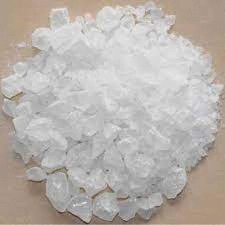
Powdered materials can be used as reference materials or analytical samples in appropriately controlled laboratory environments. However, visual appearance cannot establish chemical identity or purity.
A white or crystalline powder, for example, cannot reliably be identified as Ethylpentedrone without analytical confirmation.
For that reason, researchers and analytical laboratories may use validated methods such as:
- Gas chromatography-mass spectrometry (GC-MS)
- Liquid chromatography-mass spectrometry (LC-MS)
- High-resolution mass spectrometry
- Nuclear magnetic resonance spectroscopy
- Chromatographic comparison with authenticated reference materials
The most appropriate analytical technique depends on the purpose of the investigation, sample matrix, available instrumentation, and laboratory validation procedures.
Ethylpentedrone Analytical Research
Analytical chemistry is one of the important research areas associated with new psychoactive substances.
Because new synthetic cathinones can appear rapidly, laboratories may need reliable analytical methods for identifying compounds in seized materials, biological samples, or reference materials.
NEP has multiple standardized identifiers that can assist with this process.
The EUDA report provides the compound’s CAS numbers, InChI identifiers, InChIKey values, and structural information for both the base and hydrochloride forms.
These identifiers help researchers distinguish NEP from closely related synthetic cathinones.
Ethylpentedrone Pharmacological Research
Ethylpentedrone is associated with stimulant pharmacology because of its classification as a synthetic cathinone.
However, the available scientific evidence for individual new psychoactive substances can vary considerably.
The presence of structural similarities between NEP and other cathinones can help researchers develop hypotheses about pharmacological activity, but structural similarity alone does not establish identical potency, receptor interactions, pharmacokinetics, or toxicity.
For that reason, compound-specific experimental evidence should be used whenever possible.
Research may examine areas such as:
- Neurotransmitter transporter interactions
- Pharmacodynamic properties
- Pharmacokinetic behavior
- Metabolism
- Analytical detection
- Toxicological effects
- Comparative cathinone pharmacology
These areas are primarily relevant to scientific characterization and public-health research.
Ethylpentedrone Metabolism Research
Metabolism is another important area when studying synthetic cathinones.
Researchers investigate metabolic pathways to understand how compounds are transformed within biological systems and to identify metabolites that can be useful as biomarkers.
For forensic laboratories, metabolite information can be especially valuable when investigating biological samples.
The EUDA’s scientific assessment of NEP provides information on the substance’s metabolism and related toxicological considerations.
Because metabolism can vary according to the compound, biological system, exposure circumstances, and other factors, findings from one synthetic cathinone should not automatically be applied to another.
Ethylpentedrone Toxicology
Toxicology research examines the potential harmful effects of chemical substances on biological systems.
NEP has attracted regulatory attention because of concerns surrounding synthetic cathinones and their health effects. EUDA’s 2025 initial report was specifically prepared to assess available scientific information and potential public-health risks associated with the substance.
Researchers may examine:
- Acute toxicity
- Biological markers
- Metabolism
- Analytical detection
- Adverse-event reports
- Poisoning investigations
- Interactions with biological targets
It is important to avoid presenting Ethylpentedrone as safe simply because it is discussed in a research context.
Ethylpentedrone and New Psychoactive Substances
NEP is an example of a new psychoactive substance (NPS).
The term NPS refers broadly to substances that produce psychoactive effects and may be chemically different from traditional controlled drugs or may emerge before comprehensive scientific and regulatory information becomes available.
The EUDA monitors NPS through its Early Warning System. Its 2025 initial report specifically identified N-ethylnorpentedrone as a synthetic cathinone being monitored through this system.
The monitoring of new substances allows authorities and researchers to collect information about their chemistry, prevalence, health effects, and potential risks.
Ethylpentedrone Legal Status
The legal status of Ethylpentedrone is an especially important consideration.
In January 2026, the EU introduced new control measures covering N-ethylnorpentedrone (NEP) alongside 2-MMC and 4-BMC. EUDA states that these substances were brought under control across the EU following risk assessments conducted in 2025.
The measures entered into force on 12 January 2026, with EU Member States required to introduce corresponding national legislation by July 2026.
Because national legislation can differ and regulatory classifications can change, anyone conducting legitimate research should verify the current requirements applicable to their jurisdiction and institution.
Ethylpentedrone Research and Laboratory Safety
Ethylpentedrone should not be presented as an approved medicine, dietary supplement, or treatment.
Laboratory work involving psychoactive synthetic cathinones should be performed within appropriate institutional safety and regulatory frameworks.
Relevant considerations can include:
- Appropriate personal protective equipment
- Controlled laboratory access
- Accurate compound labeling
- Appropriate storage
- Exposure controls
- Chemical hygiene procedures
- Waste management
- Validated analytical procedures
- Applicable legal requirements
The exact controls required will depend on the jurisdiction, institution, quantity, physical form, and research activity.
Frequently Asked Questions About Ethyl Pentedrone
What is Ethyl Pentedrone?
Ethylpentedrone, also known as N-ethylnorpentedrone (NEP), is a synthetic cathinone with the systematic chemical name 2-(ethylamino)-1-phenylpentan-1-one.
Is Ethylpentedrone the same as NEP?
Yes. NEP is a commonly used abbreviation for N-ethylnorpentedrone, which is also known as Ethylpentedrone or N-ethylpentedrone.
What is the chemical formula of Ethylpentedrone?
The molecular formula is C13H19NO.
What is the chemical name of Ethylpentedrone?
Its IUPAC name is 2-(ethylamino)-1-phenylpentan-1-one.
What is the CAS number of Ethylpentedrone?
The EUDA identifies 779974-89-9 for the base compound and 18268-16-1 for the hydrochloride salt.
Is Ethylpentedrone a synthetic cathinone?
Yes. EUDA identifies N-ethylnorpentedrone as a synthetic cathinone and monitors it as a new psychoactive substance.
How is Ethylpentedrone different from pentedrone?
Ethylpentedrone is the N-ethyl analogue of pentedrone. Pentedrone contains a methylamino group, whereas Ethylpentedrone contains an ethylamino group.
Is Ethylpentedrone controlled?
Its regulatory status depends on jurisdiction. However, EUDA reports that NEP was brought under EU drug-control measures in January 2026.
Is Ethylpentedrone approved for medical use?
It should not be described as an approved medicine or established treatment.
What is Ethyl Pentedrone Powder?
The term refers to a powdered physical form of Ethylpentedrone. Physical appearance alone does not establish the identity or purity of a material, so appropriate analytical testing is necessary for reliable identification.
Conclusion
Ethyl Pentedrone Powder, commonly referred to as N-ethylnorpentedrone (NEP), is a synthetic cathinone with the systematic name 2-(ethylamino)-1-phenylpentan-1-one.
The compound has the molecular formula C13H19NO and is structurally related to pentedrone and other N-alkylated cathinones. Its chemical identity can be established using standardized identifiers and appropriate analytical techniques.
Ethylpentedrone is relevant to research involving analytical chemistry, forensic toxicology, pharmacology, metabolism, and new psychoactive substance monitoring.
Its regulatory significance has also increased. In 2026, EUDA reported that N-ethylnorpentedrone was brought under EU drug-control measures following a scientific risk assessment.
For an authoritative research page, the strongest SEO strategy is therefore to focus on the compound’s chemical identity, molecular properties, analytical characteristics, research context, toxicology, and regulatory status, while avoiding unsupported claims about safety, efficacy, therapeutic benefits, or human use.



 English
  French
  Spanish
  Italian
  Portuguese
  Dutch
Dutch
Valoraciones
No hay valoraciones aún.