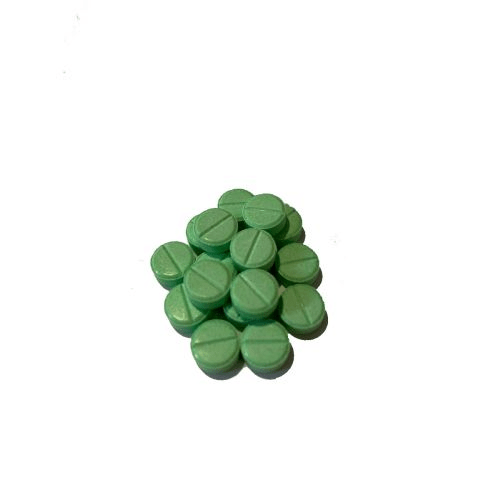

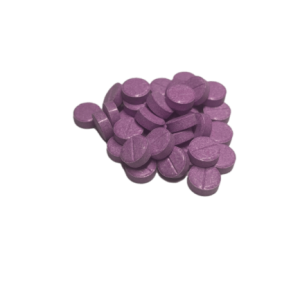
Buy 3-CMC Pellets – 220mg
3-CMC Chemical Purchase Description
When you buy 3-CMC, also known as 3-chloromethcathinone or clophedrone, it is a synthetic cathinone belonging to a broader class of β-keto phenethylamine derivatives. From a chemical perspective, 3-CMC contains a substituted phenyl ring, a ketone group, and a methylamino side chain. The compound is structurally related to other methcathinone derivatives, but the position of its chlorine substituent distinguishes 3-CMC from positional isomers such as 2-CMC and 4-CMC.
3-CMC Chemical Name and Molecular Formula
The IUPAC name for 3-CMC is 1-(3-chlorophenyl)-2-(methylamino)propan-1-one. Its molecular formula is C₁₀H₁₂ClNO, and its molecular weight is approximately 197.66 g/mol. The compound has the CAS number 1049677-59-9. These identifiers are useful for analytical chemistry, forensic testing, compound identification, and scientific literature searches.
The molecular structure can be represented using the SMILES notation:
O=C(C1=CC(Cl)=CC=C1)C(C)NC
Its InChIKey is VOEFELLSAAJCHJ-UHFFFAOYSA-N, providing another standardized identifier for database and analytical applications.
Chemical Structure of 3-CMC
The structure of 3-CMC can be understood by examining its principal functional components.
First, the molecule contains a phenyl ring. A chlorine atom is attached to the third position of this aromatic ring, giving the compound its “3-chloro” designation.
Second, the molecule contains a β-keto group. This carbonyl-containing feature is characteristic of cathinone compounds and distinguishes synthetic cathinones from their corresponding phenethylamine analogues.
Third, 3-CMC contains a methylamino group attached to the carbon adjacent to the carbonyl group. The presence of this N-methylamino substituent is responsible for the “methcathinone” component of its chemical classification.
Together, these structural elements place 3-CMC within the synthetic cathinone family. The European Union Drugs Agency describes synthetic cathinones as β-keto analogues of corresponding phenethylamines.
3-CMC and Synthetic Cathinones
Synthetic cathinones are chemically related to cathinone, a naturally occurring compound associated with the khat plant (Catha edulis). Synthetic derivatives modify the basic cathinone structure through substitutions on the aromatic ring, nitrogen atom, or carbon side chain.
The β-keto group is particularly important from a chemical perspective. According to the EUDA, this feature makes cathinone derivatives more polar than corresponding phenethylamine derivatives, which can influence their ability to cross the blood-brain barrier and consequently affect their pharmacological characteristics.
However, the pharmacology of many ring-substituted synthetic cathinones remains incompletely characterized. Therefore, structural similarity between compounds should not be interpreted as evidence that two substances have identical biological effects.
3-CMC Chirality and Stereochemistry
An important chemical characteristic of 3-CMC is chirality.
The molecule contains a chiral center within its side chain. As a result, two possible enantiomers exist: (R)-3-CMC and (S)-3-CMC. These molecules have the same molecular formula and connectivity but differ in their three-dimensional spatial arrangement.
The World Health Organization’s Expert Committee on Drug Dependence noted that information concerning the enantiomeric composition of 3-CMC encountered on the drug market was limited. Consequently, analytical characterization can be important when determining the precise composition of a sample.
This stereochemical property matters in analytical chemistry because different enantiomers can interact differently with biological targets. Consequently, researchers studying 3-CMC may need analytical techniques that can distinguish stereoisomers when stereochemical composition matters.
3-CMC Positional Isomers
3-CMC belongs to a group of chloromethcathinone positional isomers. The number in the name identifies the location of the chlorine atom on the phenyl ring.
For example:
- 2-CMC: chlorine at the second position
- 3-CMC: chlorine at the third position
- 4-CMC: chlorine at the fourth position
Although these compounds share the same general molecular formula and several structural characteristics, changing the position of a substituent can alter molecular geometry, physicochemical characteristics, receptor or transporter interactions, metabolism, and analytical behavior.
Therefore, 3-CMC should be chemically identified as its own compound rather than treated as interchangeable with other chloromethcathinones.
Chemical Identification of 3-CMC
For laboratory and forensic purposes, reliable identification should rely on appropriate analytical techniques rather than appearance alone.
Techniques such as mass spectrometry, chromatography, and spectroscopic analysis can be used to characterize chemical substances and distinguish structurally related compounds. This is particularly important with synthetic cathinones because visually similar materials can contain different compounds or mixtures.
Chemical reference databases provide several identifiers for 3-CMC. UNODC lists its CAS number, molecular formula, molecular weight, InChI representation, InChIKey, and SMILES notation.
These standardized identifiers make it easier for researchers, toxicologists, forensic laboratories, and analytical chemists to cross-reference the compound across scientific databases.
3-CMC Chemical Research
Scientific interest in 3-CMC has focused on its chemistry, pharmacology, toxicology, prevalence, and classification as a new psychoactive substance. The EUDA has monitored 3-CMC through its early-warning system since 2014 and subsequently conducted a formal risk assessment.
The compound has also become relevant to forensic and regulatory chemistry. UNODC records 3-CMC as internationally controlled, with scheduling recorded in 2024.
More recent EUDA reporting has examined precursor chemicals and the changing availability of 3-CMC in Europe, reflecting continued interest from forensic science, drug monitoring, and regulatory authorities.
3-CMC Chemical Profile Summary
| Property | Description |
|---|---|
| Common name | 3-CMC |
| Full name | 3-Chloromethcathinone |
| Alternative name | Clophedrone |
| IUPAC name | 1-(3-Chlorophenyl)-2-(methylamino)propan-1-one |
| Chemical class | Synthetic cathinone |
| Effect classification | Stimulant |
| Molecular formula | C₁₀H₁₂ClNO |
| Molecular weight | 197.66 g/mol |
| CAS number | 1049677-59-9 |
| Chirality | Chiral compound with R and S enantiomers |
| Key structural feature | β-keto phenethylamine framework |
| Related compounds | 2-CMC and 4-CMC |
Conclusion
From a chemical standpoint, 3-CMC (3-chloromethcathinone) is a structurally defined synthetic cathinone characterized by a 3-chlorophenyl ring, β-keto group, and N-methylamino side chain. Its molecular formula is C₁₀H₁₂ClNO, with a molecular weight of approximately 197.66 g/mol. The compound’s chirality and positional relationship to other chloromethcathinones are important considerations for analytical and forensic research. Buy 3-CMC Pellets – 220mg.
 English
  French
  Spanish
  Italian
  Portuguese
  Dutch
Dutch
Avaliações
Ainda não existem avaliações.